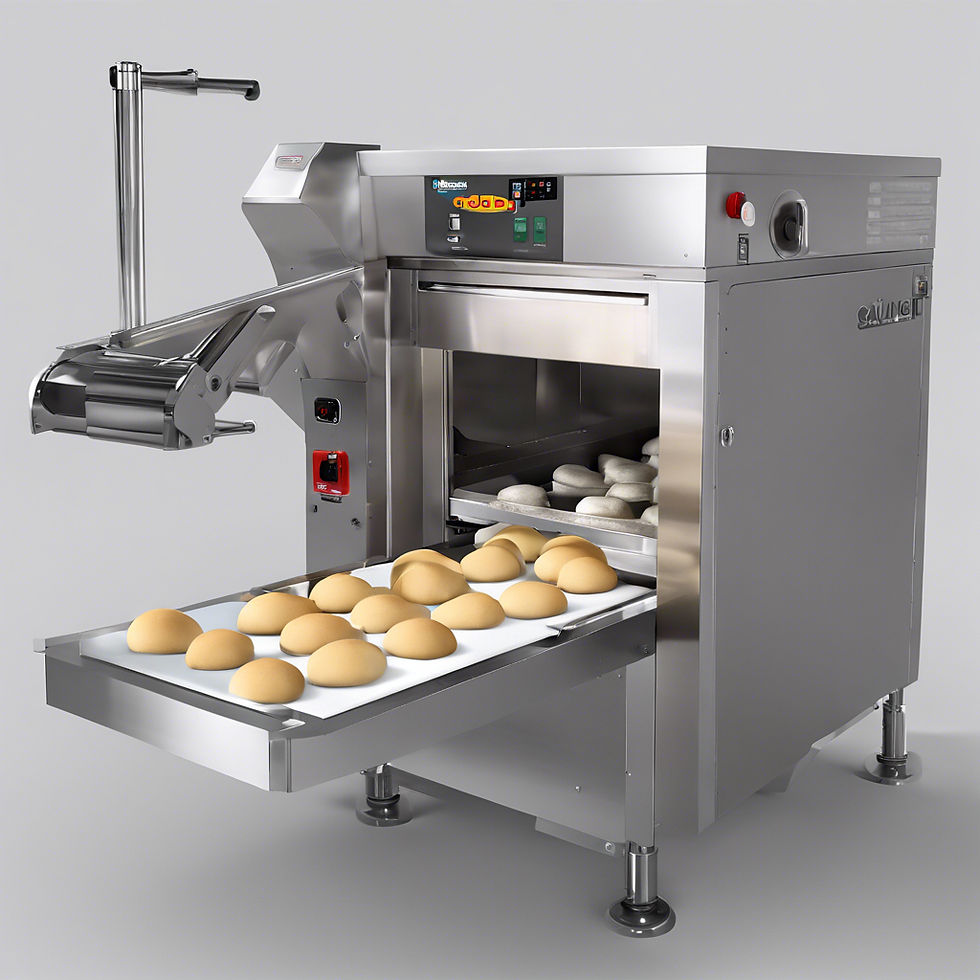
Dough Kneading Machines vs. Stand Mixers: Tips for Consistent Dough Texture
- Yina Huang
- Jul 24, 2025
- 6 min read

Whether you’re baking artisan bread or sweet pastries, dough texture is everything. The kneading process is what activates gluten and gives baked goods their strength, elasticity, and bite. But achieving that ideal consistency depends heavily on the equipment you use.
Should you invest in a commercial dough kneading machine or rely on a standard stand mixer? What factors matter most when deciding which tool to use for your bakery or kitchen?
This guide breaks it down for you, highlighting features, use cases, and tips to get consistent dough results every time.

Dough Kneading Machines: Built for Strength and Scale
A dough kneading machine is engineered specifically for mixing and kneading large quantities of dough. Often found in commercial bakeries, these machines are designed for reliability, power, and efficiency.
Key Features and Advantages:
Heavy-Duty Motor Power: Designed to handle stiff, high-gluten doughs without overheating.
Large Bowl Capacity: Ranges from 15kg to over 125kg of dough, ideal for high-output bakeries.
Automatic Functions: Many offer programmable settings for kneading time, speed, and safety shutdown.
🧠 Pro Tip: In bakeries using over 25kg of flour daily, upgrading to an 80kg dough kneading machine can improve batch consistency and reduce manual labour.
Best For:
Commercial bakeries
Food factories
Pizza chains with daily high-volume dough needs
Takeaways:
Designed for consistent, repeatable kneading
Handles heavy, high-gluten dough effortlessly
Maximizes productivity and reduces operator fatigue
Stand Mixers: Versatile and Convenient for Small Batches
Stand mixers are multitasking kitchen appliances suitable for home bakers and small-scale commercial setups. While they can knead dough, it’s not their sole specialty.
Key Features and Advantages:
Multi-Functional Use: Mix, whip, and knead in one unit with interchangeable attachments.
Compact Design: Fits well in kitchens with limited counter space.
Budget-Friendly: Lower upfront cost compared to industrial kneading machines.
However, stand mixers have limitations when it comes to kneading stiff dough or large batches—they can overheat or underperform if overused.
⚙️ Pro Tip: If you use a stand mixer for dough, stick to smaller batches (under 2kg) and monitor the motor temperature to prevent strain.
Best For:
Home bakers
Cafes and boutique bakeries
Businesses with limited space or output needs
Takeaways:
Offers flexibility across multiple baking tasks
Compact and affordable
Not ideal for frequent or large-scale dough kneading
Side-by-Side Comparison: Dough Kneading Machine vs. Stand Mixer
Feature | Dough Kneading Machine | Stand Mixer |
Power | High-torque, heavy-duty | Moderate, may overheat with heavy dough |
Batch Capacity | 15–125kg+ dough | 0.5–5kg of dough |
Speed Settings | Dedicated to kneading | General-purpose settings |
Ideal Use Case | Commercial production | Light-duty, multipurpose use |
Cost | Higher investment | Lower cost entry point |
Use Case Recommendations:
Choose a Dough Kneading Machine if you operate a bakery producing more than 10kg of dough per batch or run multiple shifts per day.
Choose a Stand Mixer if you bake a few loaves at a time, need an all-in-one device, or have tight budget/space constraints.
Tips for Consistent Dough Texture (No Matter the Machine)
No matter whether you use a 200kg spiral kneading machine in a commercial bakery or a 7L stand mixer in a café, consistency in dough texture comes down to understanding timing, speed, hydration, and gluten development.
Here’s how to get it right, backed by real-world baking standards.
1. Follow Optimal Kneading Time Based on Dough Type
Different doughs require different kneading times depending on hydration level and flour strength.
Dough Type | Hydration % | Typical Kneading Time | Example Batch Size | Notes |
White Bread Dough | 60–65% | 8–12 min (machine) | 10–30kg | Look for a smooth, elastic finish |
Baguette Dough | 70–75% | 12–15 min (machine) | 15kg+ | May require rest & stretch |
Pizza Dough | 55–60% | 10–13 min (machine) | 5–20kg | Watch for the "windowpane" stage |
Brioche Dough | 65–70% | 15–20 min (stand mixer) | 2–5kg | Mix on medium until glossy |
🧠 Pro Tip: For manual stand mixers, add 3–5 extra minutes to match the power of a professional kneading machine.
2. Use Correct Speed Settings
Using the wrong speed can tear your dough or fail to activate the gluten network:
Speed 1–2 (Low): Ideal for mixing ingredients together initially.
Speed 3–4 (Medium): Used for actual kneading in stand mixers.
Spiral Mixers (like 80kg models) usually run at:
Low Speed: ~100 rpm
High Speed: ~200 rpm
💡 Example: When kneading 80kg of dough in an industrial spiral mixer (e.g., 125kg flour capacity), run at low speed for 5–6 minutes, then high speed for another 6–8 minutes for strong gluten development.
3. Watch for Visual & Physical Cues
Machines are helpful, but your eyes and hands are the final judge.
Signs your dough is ready:
Smooth surface with no lumps or dry spots
Pulls away cleanly from the bowl
Passes the windowpane test: A piece of dough stretches into a thin translucent film without tearing
🧪 Example: In an 80% hydration ciabatta dough, full gluten development may take up to 18–20 minutes, including rest periods, and still pass the windowpane test.
4. Adjust for Ambient Conditions
Humidity and temperature can affect flour absorption and kneading outcomes:
Hot kitchens (30°C+): Reduce kneading time slightly to avoid over-oxidizing.
Cold environments (under 20°C): Extend mixing by 1–2 minutes or use warm water (~35°C) to help yeast activation.
🌡️ Example: In cooler rooms (18°C), kneading 30kg of toast dough may require 2 extra minutes for the same elasticity achieved in a warmer room.
Summary Takeaways:
Match kneading time and speed to your batch size and dough type
Use physical cues like stretchiness and smoothness over just timing
Consider climate and hydration when adjusting your routine
Larger machines reduce kneading time but require temperature monitoring
🔍 Pro Tip: Track your results in a dough log—record time, speed, water temp, ambient temp, and outcome. You’ll build consistency across shifts and bakers.
When to Choose Each Option: Your Decision Checklist
Choosing between a dough kneading machine and a stand mixer depends on your daily output, kitchen space, staff workflow, and long-term goals. Below is a practical guide to help you decide, based on real production needs and operating conditions.
✅ Choose a Dough Kneading Machine if:
🔄 Your daily flour usage exceeds 15kg
Example: If you're producing over 25kg of dough daily, a 50kg or 80kg spiral mixer ensures consistent gluten development without operator fatigue.
🕒 You run multiple batches per day
A commercial kneading machine with dual-speed motors (e.g., 100/200 rpm) saves 30–50% time per batch compared to a domestic stand mixer.
🧑🍳 You operate a bakery, food factory, or pizza outlet
Example: A Guangzhou-based pizza chain producing 300 pizzas daily typically uses a 50–80kg dough mixer for uniformity and efficiency.
🔌 You have access to 380V three-phase power
Larger machines (80kg–200kg) require higher voltage to power the heavy-duty motor reliably.
💰 You're investing for long-term scaling
Though the initial cost is higher (¥10,000–¥30,000+), you reduce labour costs and minimize batch variability.
🧠 Pro Tip: Most industrial bakeries amortize their dough kneading machine investment within 12–18 months based on labour savings and reduced batch loss.
✅ Choose a Stand Mixer if:
🍞 You produce less than 5kg of dough per batch
Example: Home bakers or cafes making 10–20 loaves or croissants per day can use a 7L–20L mixer effectively.
🏪 You have limited space or power
Most stand mixers operate on 220V single-phase power and take up under 0.5 m² of counter space.
💼 You bake different types of goods (not just bread)
Use the same mixer to whip cream, make batter, or knead light dough for pastries.
💸 You’re starting with a limited budget
Entry-level commercial stand mixers (20L–40L) cost between ¥2,000 and ¥8,000 and are ideal for small startups.
🔄 You need flexibility over capacity
Cafes and boutique bakeries that rotate between cake, pastry, and light bread prep benefit from the versatility.
🧠 Pro Tip: For higher flexibility, pair a stand mixer with a manual dough sheeter or divider to save time in shaping without needing a larger machine.
Summary Table: Which One Fits You?
Decision Factor | Dough Kneading Machine | Stand Mixer |
Batch Size | 15–200kg | 0.5–5kg |
Power Required | 380V 3-phase | 220V single-phase |
Space Needed | Large footprint (1.2–1.5 m²+) | Small footprint (0.4–0.6 m²) |
Use Case | Bakery, pizza factory, food production | Café, home baker, light-use bakery |
Versatility | Single-purpose kneading | Multi-purpose (whip, knead, mix) |
Budget | ¥10,000–¥30,000+ | ¥2,000–¥8,000 |
Conclusion: Pick the Right Tool for Your Baking Goals
Choosing between a dough kneading machine and a stand mixer isn’t just about budget—it’s about production needs, kitchen layout, and consistency goals.
If you’re scaling your bakery or aiming for higher output, a dedicated kneading machine is a game-changer. For more casual or flexible baking, a stand mixer remains a strong ally.
Ready to Upgrade Your Dough Production?
At Yuemen Baking Equipment, we offer a complete range of dough kneading machines, from 15kg to 200kg capacity, trusted by bakeries and food producers across Asia, Africa, and the Middle East.
✅ Factory-direct pricing from Guangzhou, China
✅ Reliable, CE-certified commercial bakery machines
✅ Custom voltage options and expert support
📲 Contact us on WhatsApp/WeChat: +86 188 1945 9649
📩 Request a product catalog or tailored quotation today
Let’s help your bakery rise to the next level—literally.